no pop-ups until fall
cookies don't fare well in
100+ degree weather

The Bakers Salt Ratio: Why Your Dough Is Weak (And How To Fix It) ⚖️🧂
Stop guessing and start measuring. If your bread lacks structure or the crust looks dull, you’re likely ignoring the most critical chemical balancer in your kitchen: Salt. In this breakdown, we’re diving into the Baker’s Golden Ratio—the exact 2% formula used at UNHiNGED Bakery to control fermentation velocity, strengthen the gluten net, and trigger flavor alchemy. This isn't just a seasoning; it's the "beast" controller for every professional-level sourdough loaf. Inside this guide: The 2% Rule: The formula for a professional-level finish every time. Controlling the Beast: How salt manages fermentation and structural integrity. Salt Weight Formula: A simple math breakdown (Flour Weight × 0.02) for any batch size. Free Download: Grab my Baker’s Salt Cheat Sheet PDF to nail your ratios without the guesswork. GET THE GUIDE: [Insert Link to your Hostinger File Library] 📑✨
SOURDOUGHEDUCATIONCOOKIES
Dallas Brown
5/8/20262 min read
🧂 The Magic of Salt: Why Your Dough Depends on It
We’ve all been there: you spend hours nurturing your starter, perfecting your hydration, and waiting for that perfect proof... only to realize you forgot the salt. 🤦♂️
In the world of artisanal baking, salt isn't just a seasoning—it’s a structural necessity. At UNHiNGED Bakery, we call it "Flavor Alchemy." 🧪✨ Without it, your bread is just pale, tasteless, and structurally unsound.
Here is why salt is the unsung hero of your kitchen! 🥯🤘
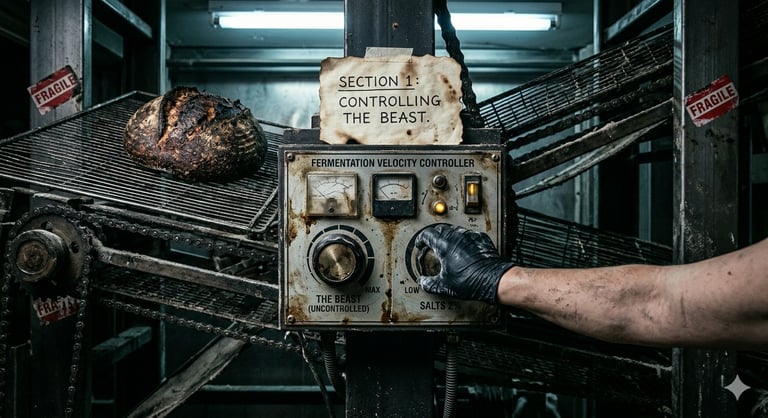
🦁 Controlling the "Beast" (Yeast Regulation)
Yeast is a wild, living organism, and left to its own devices, it can get a little over-excited! 📈 Salt acts as a natural "brake" on fermentation. By slowing down the yeast's activity, salt ensures that the dough doesn't proof too quickly and lose its structural integrity.
This controlled pace allows for a more complex, artisanal flavor profile to develop—exactly what we aim for with every bake. 🥖🕰️
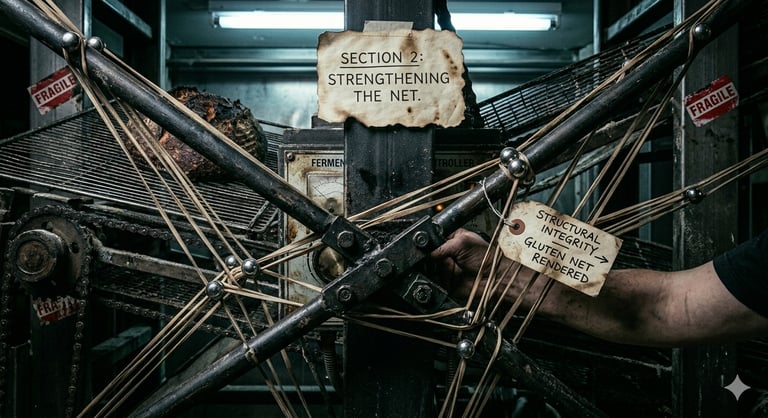
🏗️ The Invisible Architect (Gluten Strength)
Think of salt as the structural engineer of your dough. 👷♂️ It chemically reacts with the proteins in your flour to tighten the gluten network. This creates a stronger "net" that traps carbon dioxide effectively, giving you:
Impressive oven spring 🚀
A manageable, non-sticky dough 🙌
A crumb that doesn't collapse under the weight of premium ingredients
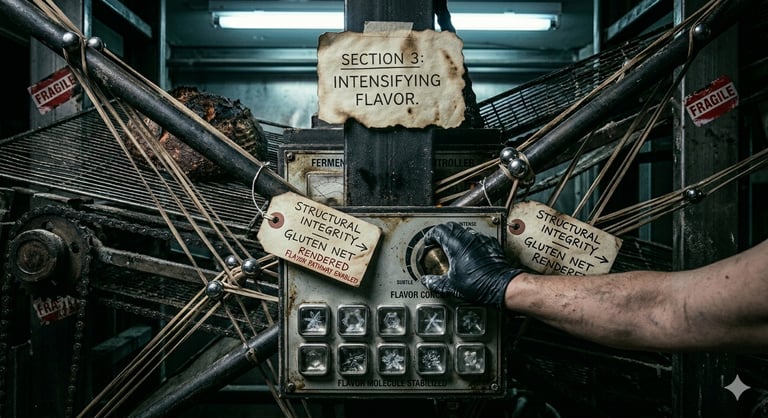
🍩 Flavor Alchemy & The Golden Crust
In our kitchen, we aren't just looking for "salty"; we are looking for Flavor Alchemy. 🧪 Salt highlights the subtle, nutty notes of the grain and balances the sweetness of the starches.
It’s also the secret behind that deep, mahogany crust. 🤎 By regulating the yeast, salt ensures there are enough residual sugars left in the dough to caramelize beautifully during the bake (thanks, Maillard reaction!). 🔥
🍪 What’s Baking Next?
If you think salt is important, wait until we talk about FLOUR. 🌾 I’m currently finalizing a deep-dive digital guide: How to Choose Flour. Keep an eye out for it right here on the blog!
📅 Save the Date: My new Bourbon Caramel & Toasted Pecan cookie launches this June for Father’s Day! 🥃🥜 You won't want to miss this one. ⏳
Community Question: Have you ever forgotten the salt in a bake? 🙈 Tell me your "pale bread" horror stories in the comments below! 👇💬
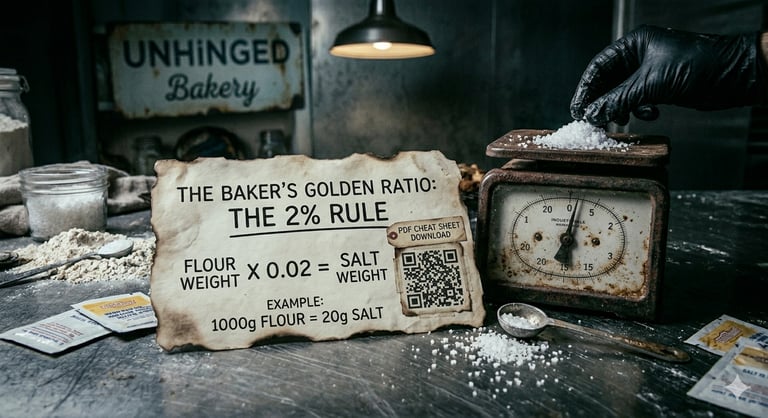
📏 The Baker’s Golden Ratio
For a professional-level finish, I always recommend the 2% Rule. ⚖️
The Formula: Flour Weight × 0.02 = Your Salt Weight.
Example: For 1000g of flour, you need 20g of salt. 🧂
🎁 PRO-TIP: I’ve put together a Free Baker’s Salt Cheat Sheet PDF to help you nail your ratios every time! [Download it here] 📑✨
UNHiNGED Bakery
Home-based microbakery in Central Illinois. Cottage Food License and Health Department compliant. 2026.
Customer Service: admin@unhingedbakery.com
📍Pekin, Illinois
📞 (309) 213-4054
© 2026. All rights reserved.